Do We Have a Right to Be Forgotten Online? My Times Union Op-Ed
The internet never forgets. But maybe it should learn how to forgive.

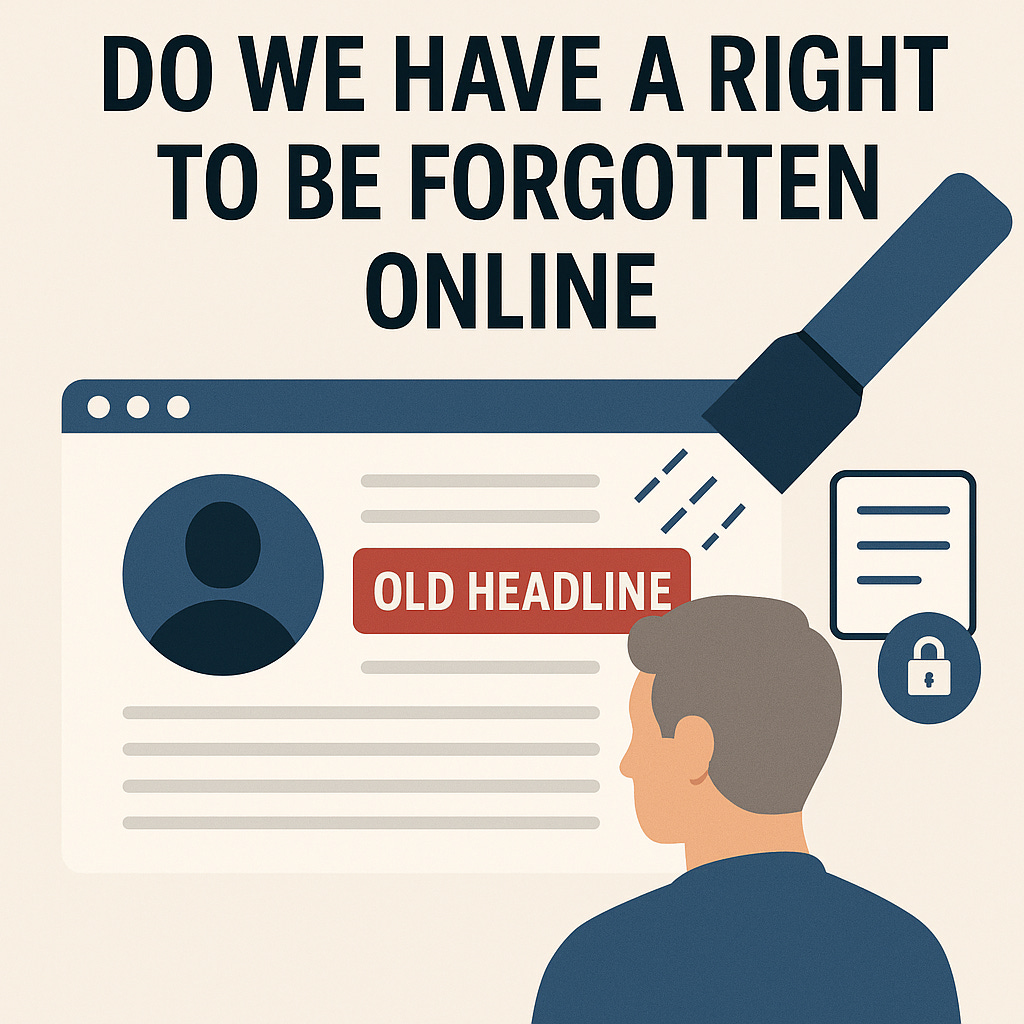
This essay expands on a commentary originally published in the Times Union.
I am grateful to the Times Union for running my commentary this weekend, “Do we have a right to be forgotten online.”
It is about what happens when a single outdated headline ends up defining a person for ten years. It is about how digital records outlive human growth. And it is about the undercurrent of harm that follows people long after they have rebuilt their lives.
The Problem
Imagine that someone types your name into Google and the very first thing they see is not your work or your accomplishments, but a single old local news story that has outlived the facts. It becomes your permanent digital biography. It becomes the thing strangers judge you by. It becomes the thing potential employers, landlords, or even dates quietly use to eliminate you.
For a decade, that has been my reality.
The piece shadowing me is about a DWI from a decade ago. No crash. No injuries. I pled guilty, accepted the consequences, completed treatment, and rebuilt my life. But none of that context exists online. What remains is the headline shorthand.
Why This Matters
I tried privately and politely to ask that it be updated or contextualized. There is no real process. Search engines prioritize what was clicked the most. Local news sites archive old stories without reviewing whether they still serve a public purpose. The result is a quiet digital purgatory where you can change your life in every meaningful way and still be reduced to the worst version of yourself.
This is not censorship and it is not about erasing history. It is about proportion. It is about fairness. It is about acknowledging that our legal system recognizes growth and rehabilitation, even if our algorithms do not.
We shrug this off until it happens to us. Then it becomes very real, very fast.
What Should Change
Some countries have adopted limited “right to be forgotten” policies. In the United States, reform may come through better newsroom practices. Simple steps like adding prominent context, updates, or timestamps to stories more than five or ten years old. Or adjusting search algorithms so that stale, paywalled headlines are not treated as the most relevant version of a person.
Either way, this conversation has to start somewhere. Maybe it starts with people like me. People trying to live in the present while an outdated story keeps replaying the past.
I still believe in accountability and in the free press. I also believe in forgiveness. And our digital world should reflect the same grace we offer each other in real life.
Read the Times Union Op-Ed
Read the original commentary here.
Reflection
When I first wrote this piece, that old headline still sat at the top of my search results.
Now, after publishing new work and taking control of my digital footprint, it is finally sliding to page two. That might sound small, but anyone who has ever lived under a decade old headline knows how big that shift really is.
I am not running from the past. I am living in proportion to it.
If we care about mental health and rehabilitation, we need those values reflected in the digital world too.
Forgiveness should not stop at the search bar.
Related reading:
• The Real Point of My Times Union Op-Ed
• Notes on Cleaning Up the Search Results
Jay Werther writes about digital reputation, recovery, and second chances. Founder of the upcoming Fair Idendity Project.